A career in emergency medical services begins well before the first ambulance call. You need the judgment to stay calm, the discipline to learn a detailed patient-care process, and the credentials required to practice. Understanding the New York EMT certification requirements helps you choose the right course, prepare for the certification process, and move toward work in EMS, hospitals, fire service, public safety, or other healthcare settings.
For Staten Island and New York City residents, EMT training can be a direct path into meaningful, hands-on work. It is also demanding. New York State expects EMT candidates to complete approved education, demonstrate practical skills, and pass the required certification examination. The process is structured for a reason: EMTs make decisions that affect patients on some of the most difficult days of their lives.
New York EMT Certification Requirements at a Glance
The first step is enrolling in a New York State-approved EMT course. A state-approved course provides the required curriculum, clinical and practical instruction, skills evaluation, and preparation for the New York State certification examination. Completing an unapproved program may not qualify you to sit for New York certification, so course approval should always be confirmed before enrollment.
Candidates generally must meet New York State age and education standards. EMT students are typically required to be at least 18 years old by the applicable point in the course or certification process, and they must meet the program’s educational admission requirements. A high school diploma, GED, or equivalent educational preparation is commonly expected. Individual training providers may have additional enrollment procedures, such as an application, identification review, placement assessment, or documentation deadlines.
The core requirements usually include:
- Meeting the applicable age and education eligibility standards
- Completing a New York State-approved EMT education program
- Meeting course attendance, academic, and practical-skills standards
- Passing required practical evaluations and the New York State certification examination
- Submitting any required state certification application materials and fees
Specific details can change with state policy, examination procedures, and course schedules. A reputable training provider will explain the current requirements before class begins and help students understand what is expected at each stage.
Start With an Approved EMT Course
New York EMT education is not simply a CPR class with a final test. The Basic EMT course teaches a structured approach to emergency care, from scene safety and patient assessment to communication, documentation, and transport decisions. Students learn how to recognize and manage common medical emergencies, trauma, airway and breathing problems, bleeding, shock, behavioral emergencies, childbirth, and pediatric concerns within the EMT scope of practice.
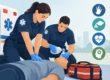
Classroom instruction matters, but it is only part of the preparation. EMT students must repeatedly practice skills such as patient assessment, airway management, vital signs, splinting, bleeding control, CPR, patient movement, and safe use of equipment. These skills must become organized and reliable under pressure, not just familiar on a study sheet.
Attendance is a serious part of certification-oriented training. Courses have scheduled sessions, required skill labs, examinations, and practical evaluations. Missing a class can mean missing a skill that builds on later instruction. Some programs offer remediation or make-up opportunities when appropriate, but students should not assume that every absence can be easily replaced. Before enrolling, review the course calendar honestly alongside work, family, school, and transportation obligations.
At TIMER, students train in a classroom-based environment with instructors who bring active EMS, hospital, nursing, and emergency-response experience to the lesson. That field perspective matters when a textbook scenario becomes a discussion about communication, scene awareness, patient dignity, and sound decision-making.
What You Will Need to Complete During Training
A strong EMT course measures more than whether a student can memorize terminology. You will be expected to demonstrate that you can assess a patient systematically, identify immediate threats, provide appropriate care, communicate with a partner, and explain your decisions. Instructors evaluate how you work through a scenario, not only whether you arrive at the final answer.
Written exams test knowledge of anatomy, medical and trauma conditions, operations, and New York State protocols taught in the course. Practical skill testing evaluates whether you can perform essential interventions safely and in the correct sequence. Students often find that the practical portion feels challenging at first because they must speak, act, observe, and think at the same time. Repetition is what turns a checklist into a usable patient-care process.
Expect to study outside scheduled class time. Reading assignments, practice questions, skills review, and preparation for examinations are all part of the workload. EMT education can work well for recent graduates, career changers, aspiring firefighters, and healthcare employees, but it requires consistent effort. The students who make the greatest progress usually treat each class as professional preparation rather than an appointment they can fit in at the last minute.
CPR, physical ability, and background checks
CPR training is foundational to EMT practice, and programs will explain the current CPR credentialing expectations connected to their course and certification process. Do not assume that an online-only CPR card will meet every requirement. Ask the school what type of CPR training is accepted and when it must be completed.
EMT work is physically active. Providers may need to kneel, lift, move equipment, assist with patient transfers, and work in confined or unpredictable spaces. New York State certification is distinct from employment requirements, however. Ambulance services, hospitals, fire departments, and other employers may require medical examinations, immunization records, drug screening, background checks, driver qualifications, or additional fitness standards. Those employer requirements can vary considerably.
The New York State Certification Examination
After successfully completing the approved course, candidates move into the New York State certification examination process. Your course staff should provide current instructions on eligibility, deadlines, applications, examination scheduling, and any required fees. Follow those instructions carefully. A missed deadline or incomplete form can delay your path to certification even when you have completed the educational work.
The examination process is designed to confirm that an entry-level EMT can apply core knowledge and patient-care priorities. Preparation should include more than rereading notes. Review why an intervention is appropriate, what comes first in a patient assessment, when to request additional resources, and how your actions fit within the EMT scope of practice.
Practical preparation deserves equal attention. Practice verbalizing your assessment, using equipment correctly, and maintaining a calm sequence when an instructor changes the scenario. In real emergency care, patients do not present in the clean order of a chapter. The ability to reassess, communicate, and adapt is part of becoming dependable.
If you do not pass an exam component on the first attempt, do not treat that result as the end of the road. Identify the gap. It may be a content area, test-taking strategy, skill sequence, or confidence issue. Remediation works best when it is specific and completed promptly. New York State has policies governing retesting and certification eligibility, so candidates should work with their training program and review the current state procedures rather than relying on secondhand advice.
Certification Is the Beginning of Professional Responsibility
Once certified, an EMT must work within New York State protocols, agency policies, medical direction, and the limits of the EMT scope of practice. Certification creates an opportunity to serve, but it also creates responsibility. Good EMTs continue to review protocols, learn from calls, accept feedback, and keep their patient-care skills sharp.
New York certification also has an expiration cycle. Recertification requires planning well before the credential lapses. Current EMTs should watch their expiration date, keep their records organized, and enroll in refresher education early enough to address updated protocols, examination preparation, or any remediation needs. Waiting until the final weeks can create unnecessary pressure and may affect employment eligibility.
For those considering EMS as a long-term career, EMT certification can support several directions. Some graduates work on ambulances; others use the credential as preparation for nursing, paramedic education, emergency department roles, firefighting, law enforcement, or other public-safety careers. The best next step depends on your goals, but the foundation is the same: reliable training, sound judgment, and respect for the people who call for help.
If emergency care is the work you want to do, begin by choosing an approved program with clear expectations and experienced instructors. Show up prepared, practice until your skills are dependable, and approach certification as the first professional commitment you make to your future patients.