A student can complete a strong EMT course, pass demanding examinations, and still ask a crucial question before applying for a job: does this credential allow me to work in New York? The distinction between NREMT versus NYS certification matters because national certification and New York State authorization are related, but they are not automatically the same thing.
For prospective EMTs in Staten Island and throughout New York City, the practical goal is clear: meet the requirements to earn New York State EMT certification and be ready to provide safe, competent patient care. Understanding where NREMT fits into that process can prevent missed paperwork, incorrect assumptions about reciprocity, and delays in starting your EMS career.
What NREMT Certification Means
The National Registry of Emergency Medical Technicians, commonly called NREMT, is a national certifying organization. It sets national standards for EMT and paramedic certification, including education verification, cognitive testing, skills-related requirements, and continued certification requirements.
NREMT certification can be valuable for EMTs who may move between states, pursue work with agencies that recognize national credentials, or want a nationally recognized record of their qualification. It also gives many students a framework for measuring their readiness against national EMS standards.
However, NREMT does not issue a state license or state certificate to practice. EMS is regulated at the state level. Each state determines who may work on an ambulance, what credentials it accepts, how reciprocity works, and what continuing education or recertification requirements apply.
That means an NREMT card by itself should never be treated as automatic permission to practice as an EMT in New York. A New York employer, ambulance service, hospital-based EMS program, or fire department may have its own hiring standards, but state certification remains the foundation for EMT practice in New York.
What NYS EMT Certification Means
New York State EMT certification is the credential that authorizes an eligible person to practice at the EMT level under New York’s EMS system. The process is governed by the New York State Department of Health and its Bureau of Emergency Medical Services and Trauma Systems.
For a new EMT candidate, the usual pathway begins with completing an approved New York State EMT course. That education is not simply a test-prep program. Students learn how to assess patients, manage airway and breathing emergencies, respond to trauma, recognize medical conditions, communicate with patients and partners, document care, and work within New York protocols and scope of practice.
After completing the required course components, students must meet the applicable examination and certification requirements. Requirements may include course attendance, practical skill evaluation, written examination eligibility, and other administrative standards. Because EMS rules and examination processes can change, candidates should confirm the current requirements with their course provider and the state before making career decisions.
New York certification is particularly important for students planning to work in the five boroughs, on Staten Island, or with agencies serving surrounding communities. It prepares EMTs for the systems, expectations, and patient-care environment they will encounter locally.
NREMT Versus NYS Certification: The Practical Difference
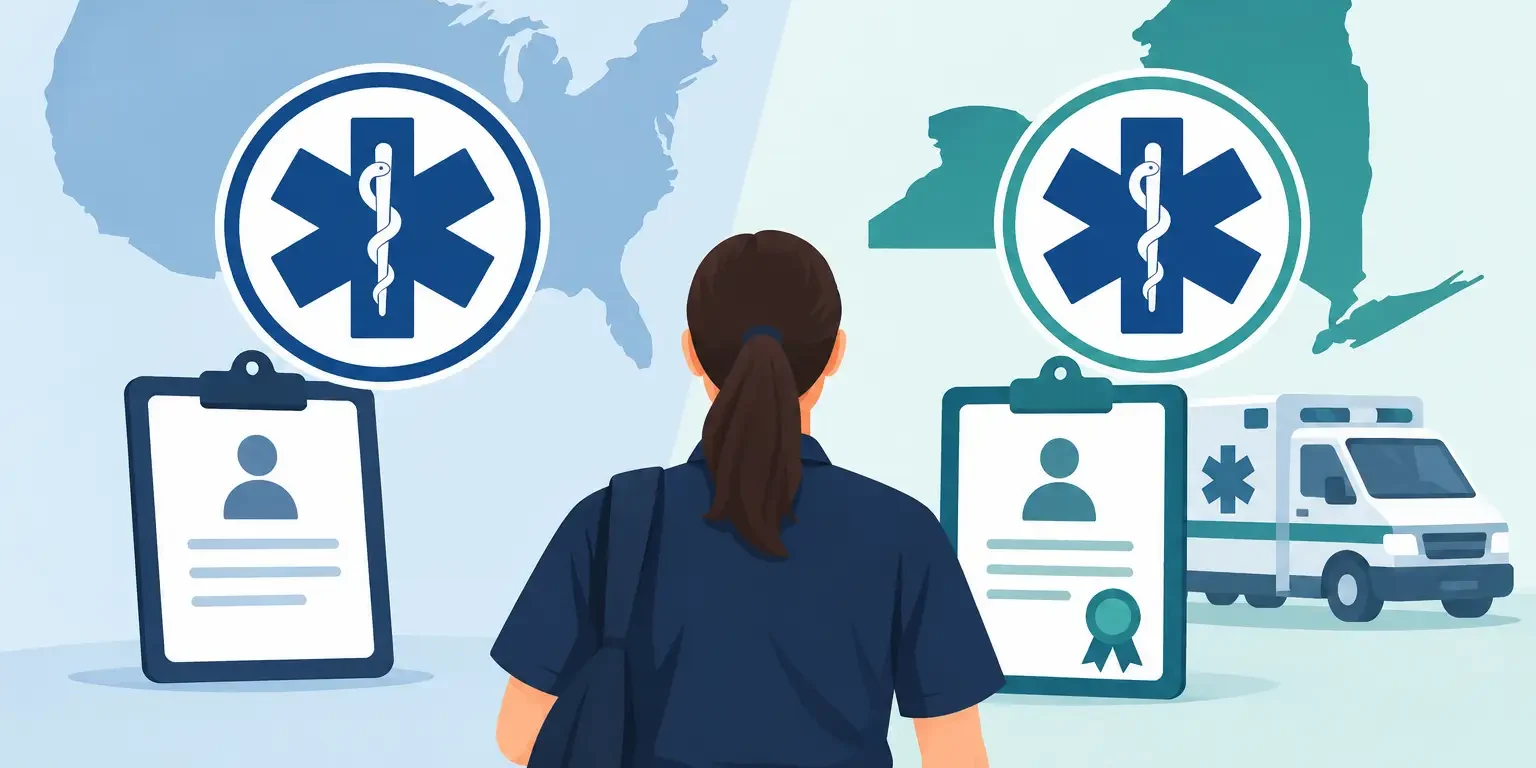
The simplest way to understand NREMT versus NYS certification is to separate national recognition from state authorization. NREMT is a national credential. NYS certification is the state credential needed to practice in New York.
For someone whose immediate plan is to work as an EMT in New York, NYS certification should be the priority. A student should select a program approved for New York State EMT education, take the coursework seriously, develop reliable hands-on skills, and prepare for the required state certification process.
For someone who expects to relocate or wants greater portability later, NREMT may offer an added advantage. Still, portability is not the same as automatic transfer. Moving to another state generally involves that state’s application process, and the state may request verification of education, current certification, examination history, background information, or additional training.
The reverse is also true. An EMT coming to New York with NREMT certification or another state’s credential should not assume they can immediately work in New York. They may need to apply for New York certification through reciprocity or another state-approved pathway. The exact process depends on the applicant’s current credentials and the rules in effect at the time of application.
Which Credential Should New York EMT Students Pursue?
For most first-time EMT students who live in New York and plan to work here, the answer is straightforward: pursue New York State EMT certification through an approved New York training program. That route aligns your education, testing preparation, and clinical decision-making with the credential local EMS employers expect.
A quality EMT course should prepare you for more than passing an exam. Emergency calls do not arrive as multiple-choice questions. You need to recognize a deteriorating patient, take a useful history, work effectively with a partner, use equipment correctly, give a clear report, and remain calm when a scene is chaotic. Those abilities are built through structured classroom instruction, practical scenarios, repetition, feedback, and remediation when necessary.
NREMT may make sense as an additional goal when your career plans extend beyond New York. It can also be relevant for military families, students considering college out of state, or EMTs who expect to pursue employment in another region. In those cases, speak with an experienced instructor early. The best path depends on where you intend to practice, when you expect to move, and which credential your prospective employer requires.
Reciprocity Is a Process, Not a Promise
Reciprocity is often misunderstood. It does not mean that every EMT credential transfers automatically from one state to another. It means a state may have a process for reviewing credentials earned elsewhere and determining whether an applicant meets its standards.
An EMT seeking New York certification from another state may need to provide proof of current certification, education records, examination information, and a completed application. The state may also require specific steps based on the applicant’s situation. Requirements for a recently certified EMT can differ from those for someone whose credential has expired or whose education was completed years ago.
Likewise, a New York EMT who plans to relocate should contact the destination state’s EMS office before accepting a position or scheduling a move. Ask what they accept, whether NREMT is required or preferred, how long the application review takes, and whether additional education is needed. Planning ahead is far easier than discovering a credential gap after a job opportunity appears.
Recertification and Continuing Readiness
Initial certification is the beginning of professional responsibility, not the finish line. EMTs must maintain their knowledge, follow current protocols, complete required recertification steps, and keep track of expiration dates. Missing a deadline can create unnecessary barriers to employment and may require additional remediation or coursework.
This is where refresher education has real value. A well-run refresher course helps experienced EMTs review updated practices, strengthen weak areas, and approach examinations with a clearer understanding of what is expected. It is also an opportunity to reconnect classroom knowledge with the judgment needed on actual calls.
At TIMER, instructors with field, hospital, nursing, and emergency-response experience emphasize that readiness comes from consistent effort. Students benefit when they ask questions, practice until skills become dependable, and treat patient care standards as professional obligations rather than boxes to check.
Questions to Ask Before You Enroll
Before committing to an EMT course, make sure you can answer a few practical questions. Is the program approved for the New York State credential you need? Does the schedule allow you to meet attendance requirements? How are practical skills taught and evaluated? What support is available if you need extra help preparing for examinations?
You should also consider your longer-term plan. If you want to work for a New York ambulance service, hospital, public-safety agency, or fire service, focus first on meeting NYS requirements. If interstate work is part of your plan, ask how national certification may fit into your timeline. Clear answers at the beginning can save time and help you choose training that supports the career you actually want.
Your EMT credential is more than a hiring requirement. It is a commitment to show up prepared when a neighbor, patient, or family is facing one of the hardest moments of their day. Choose the certification path that lets you serve your community with confidence and keep building from there.