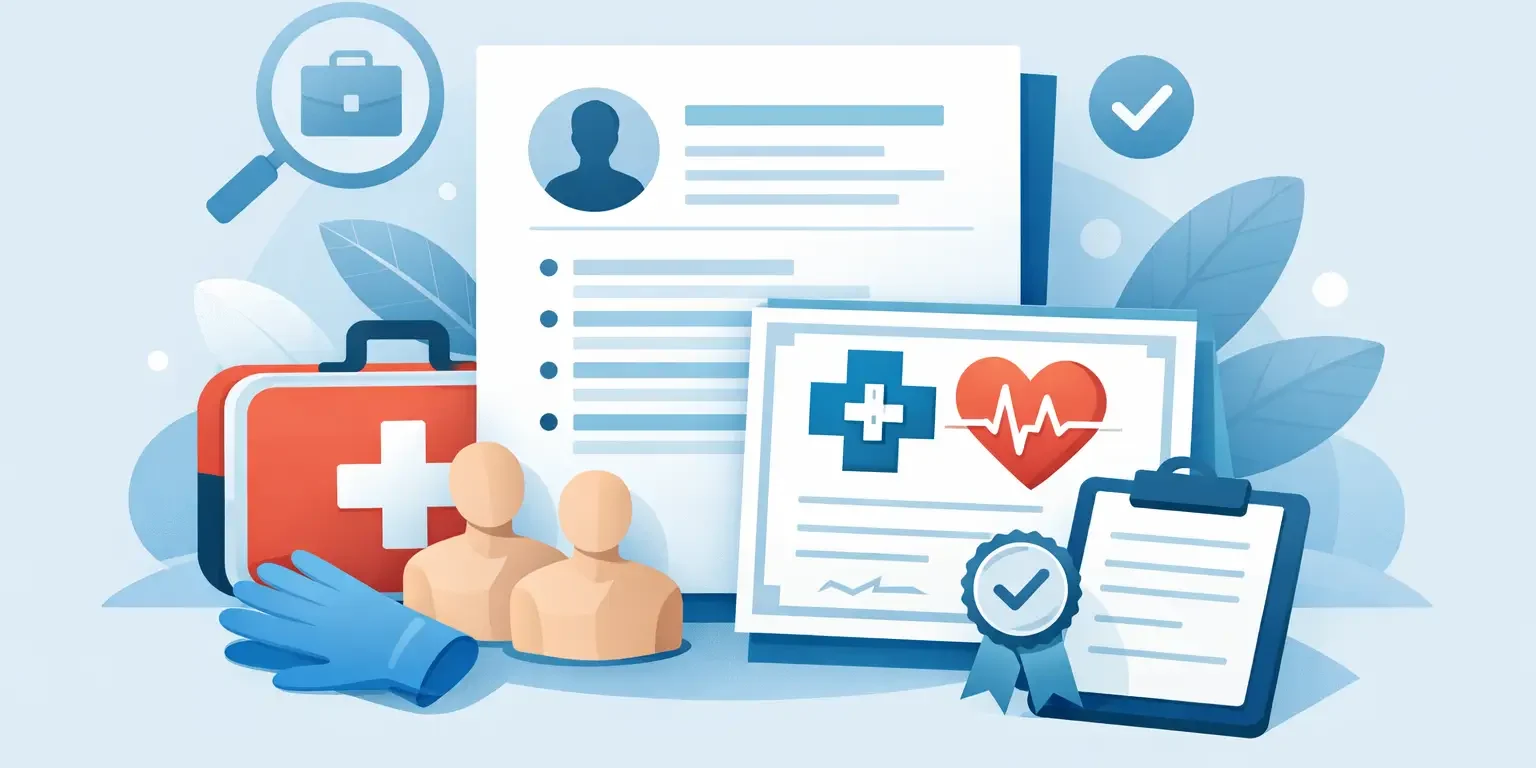
A hiring manager scanning applications for an EMT, hospital support, security, childcare, or public-safety position is looking for evidence that you can respond responsibly when someone needs help. First Aid and CPR training can provide that evidence, but only when it is easy to find and accurately described. Knowing how to list first aid and CPR certification on resume materials helps employers recognize your preparation without making them search for it.
For people beginning a healthcare or emergency-response career, these credentials are more than a line item. They show initiative, familiarity with emergency procedures, and a willingness to maintain professional standards. They do not replace EMT certification or clinical experience, but they can strengthen an application when presented clearly.
Why First Aid and CPR Credentials Belong on a Resume
First Aid and CPR certifications are especially relevant for positions involving direct public contact, patient care, children, older adults, physical activity, transportation, or workplace safety. An employer may need staff members who can act until EMS arrives, follow a facility emergency plan, or support a trained response team.
For an aspiring EMT, a current CPR credential also signals that you understand a basic expectation of emergency care. For a candidate applying to a hospital, ambulance service, fire department, school, camp, gym, or home-care agency, it can distinguish your application from one that lists only general customer service or volunteer experience.
The value depends on the job. A current American Heart Association BLS Provider credential is highly relevant for many healthcare settings. A community First Aid and CPR course may be more appropriate for recreation, education, or entry-level safety roles. List the exact training you completed rather than using a broader title that could mislead an employer.
How to List First Aid and CPR Certification on a Resume
The clearest option is a dedicated Certifications section. Place it near the top of the resume if the credential is required by the job posting or central to the position. For someone entering EMS or healthcare with limited work history, certifications can appear directly below the professional summary or education section.
Use a straightforward format that includes the credential name, issuing organization, and expiration date. If the certification includes a credential number and the employer may need to verify it, you can add that number as well. Keep the wording consistent and easy to scan.
Certifications
- Basic Life Support (BLS) Provider, American Heart Association, expires May 2028
- First Aid/CPR/AED for Adults, Children, and Infants, American Red Cross, expires October 2027
- New York State Emergency Medical Technician, expires March 2029
If you hold only one credential, it does not need to take up much space. A single, accurate line is more effective than a large section filled with unrelated online course certificates.
Use the Name Printed on Your Card
CPR training is not always the same. You may hold BLS Provider, Heartsaver First Aid CPR AED, CPR for Healthcare Providers, or another course-level credential. Employers may have specific requirements, particularly in hospitals, EMS agencies, and clinical environments. Copy the official certification title from your card or digital record.
Avoid writing simply CPR certified if your credential has expired, is still in progress, or applies only to a limited population. Precision protects your credibility. It also helps a hiring manager quickly determine whether your training meets the role’s requirements.
Include Dates That Show the Credential Is Current
Most First Aid and CPR certifications require renewal. List the expiration date whenever possible, especially if you are applying for a role where current certification is a condition of employment. Employers should not have to guess whether your training is active.
If space is limited, the expiration month and year are enough. For example: First Aid/CPR/AED, American Red Cross, valid through 08/2027. You generally do not need to list the date you first completed the course unless it helps show a long record of maintaining the credential.
Choose the Right Placement for Your Experience Level
Where the credential appears should reflect its importance to the job and your overall background.
A new EMT student, recent high school graduate, or career changer can place certifications near the top of the resume. With less field experience to show, current emergency-care credentials demonstrate readiness and commitment.
An experienced EMT, nurse, or healthcare professional may place CPR and First Aid credentials in a Certifications and Licenses section after work experience. In that case, the credentials support a record of patient care rather than serving as the main focus of the application.
For a job outside healthcare, include First Aid and CPR only when it connects naturally to the work. A lifeguard, teacher’s aide, coach, camp counselor, building-security officer, or transportation employee should usually list it. For an office position with no safety responsibilities, it may be less valuable than a technical certification or accomplishment that directly matches the job.
Match Your Resume Language to the Position
Do not rely on a certification line alone when emergency response is a meaningful part of the role. Reinforce it in your summary or experience section using language that reflects your actual training and responsibilities.
An entry-level EMS candidate might write: EMT student with current BLS training and a strong commitment to patient-centered emergency care, scene safety, and professional communication. A school or childcare applicant could write: Current in First Aid, CPR, and AED response training for adult, child, and infant emergencies.
In a work or volunteer entry, describe what you actually did. For example: Supported participant safety by monitoring activities, following emergency procedures, and maintaining current First Aid and CPR certification. Do not claim that you provided advanced medical care, performed duties outside your scope, or treated patients independently if your experience does not support those statements.
For EMS applicants, this distinction matters. CPR and First Aid training are foundational skills, while New York State EMT certification represents a separate professional credential with broader education, examination, and patient-care requirements. Employers value candidates who understand scope of practice and present their qualifications honestly.
What to Do If Your Certification Is Expired or Pending
An expired credential should not appear as current. If renewal is already scheduled and the training remains relevant, you can state that accurately: BLS Provider renewal scheduled for June 2026. Use this only when you have actually enrolled or confirmed the renewal date.
If you recently completed a course and are waiting for the official card, write completed May 2026, card pending only if you can provide documentation when asked. Do not list a course as certified before you have met all course requirements.
If you are currently taking a First Aid or CPR class, place it under Professional Development or Education as First Aid/CPR certification course in progress, expected June 2026. That shows forward progress without overstating your status.
Avoid Common Resume Mistakes
The most common problem is burying an active credential at the bottom of the page, where a reviewer may miss it. Another is listing a generic phrase such as First Aid certified without the issuing organization or expiration date. These details matter when an employer has compliance requirements.
Also avoid adding every related skill as a separate keyword. A certification in First Aid and CPR does not automatically establish proficiency in advanced airway management, medication administration, trauma care, or emergency driving. Focus on the training you completed and the responsibilities you can perform safely.
Before submitting your resume, compare the job posting with your certification section. If the employer requests BLS, use the official BLS title if that is what you hold. If the posting asks for CPR and First Aid, make both credentials visible rather than assuming one broad line will be understood. This also helps applicant tracking systems recognize the terms employers are searching for.
Build a Resume That Reflects Real Readiness
A strong emergency-care resume connects credentials, education, and conduct. Current First Aid and CPR certification shows that you have taken a practical step toward being prepared, but employers will also look for reliability, communication, judgment, and respect for procedure.
At TIMER, students preparing for EMS and healthcare pathways learn that credentials carry responsibility. Keep yours current, list it accurately, and be ready to discuss what the training taught you. When an opportunity calls for someone who can stay calm and help with purpose, that preparation should be clear before the interview even begins.