A 911 call rarely arrives at a convenient time. It may involve a child with breathing trouble, an older adult who has fallen, or a serious crash on a crowded roadway. For people considering an EMT career path New York offers a direct entry point into emergency care – but it is a path that asks for discipline, sound judgment, and a genuine commitment to serving others.
EMTs are often the first trained medical professionals to reach a patient. Their work begins before the hospital: assessing the scene, recognizing immediate threats, providing basic emergency care, communicating with dispatch and receiving facilities, and helping patients move safely to the next level of care. The role can lead to long-term work in EMS, but it also gives future nurses, firefighters, paramedics, police officers, and healthcare professionals a practical foundation in patient care.
What the EMT Role Looks Like in New York
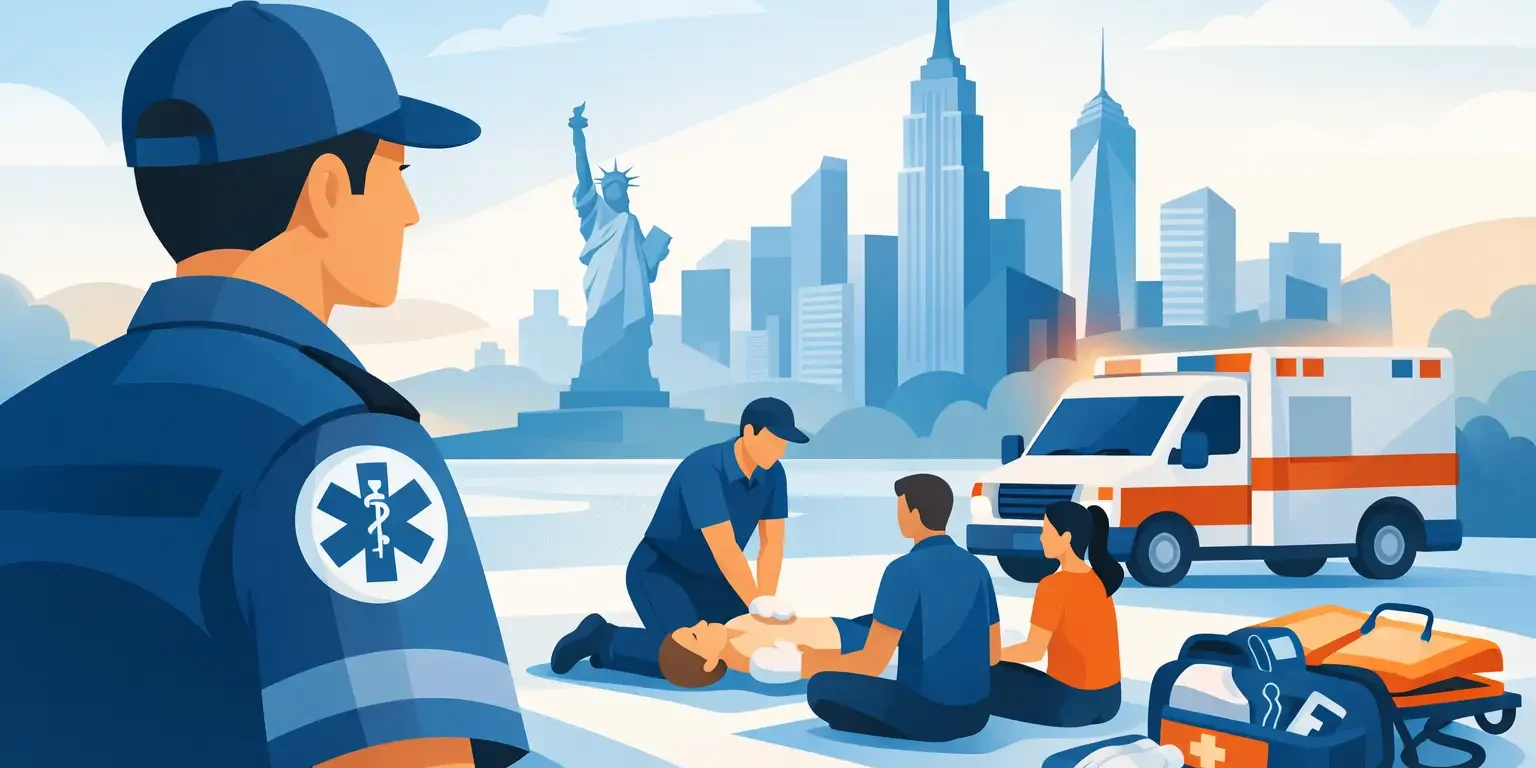
New York State EMTs provide basic life support within the scope of their certification and local protocols. That can include patient assessment, CPR, bleeding control, airway support, splinting, administering permitted medications, and assisting with transport. Just as important is the ability to obtain accurate information, document care, and make calm decisions when a patient, family member, or bystander is under stress.
The work is active and unpredictable. Some shifts involve routine transports, while others involve time-sensitive medical emergencies, trauma calls, behavioral emergencies, and multi-patient incidents. EMTs work with partners and are part of a larger system that includes dispatchers, paramedics, firefighters, police officers, nurses, physicians, and hospital staff.
That teamwork is one reason certification matters. New York State training is designed to give students a structured understanding of emergency care, not simply a collection of skills to memorize. A strong EMT student learns when to act, when to ask for additional resources, and how to protect the patient, crew, and public at the same time.
EMT Career Path New York: The First Credential
For most new candidates, the first formal step is enrolling in a New York State-approved EMT course. Before applying, prospective students should review the current state eligibility standards, including age and education requirements. Course providers can help applicants understand what documentation, attendance, and preparation are expected before class begins.
A Basic NYS EMT course combines classroom instruction with practical skill development. Students study anatomy and physiology, patient assessment, medical and trauma emergencies, airway management, pediatric and geriatric care, operations, documentation, and professional responsibilities. They also spend substantial time practicing hands-on skills in realistic scenarios.
This is not passive education. Students must be prepared to participate, practice repeatedly, accept correction, and build confidence under observation. An instructor may ask a student to explain why a treatment is appropriate, not just demonstrate how to perform it. That distinction matters in the field, where every patient and scene presents different information.
Successful completion of an approved course is followed by the required New York State certification examination process. Requirements and examination procedures can change, so students should rely on current guidance from their course provider and the state. Preparation should include regular review of course material, active skills practice, and early attention to areas that need remediation rather than waiting until the exam date is close.
Choosing Training That Prepares You for the Field
EMT education is a serious investment of time and effort. Schedule matters, particularly for students balancing a job, family responsibilities, or college coursework. Yet the right class is about more than finding the most convenient meeting time.
Look for a program with experienced instructors who understand current EMS practice and can connect textbook concepts to real calls. A course should provide organized lessons, practical stations, scenario-based training, clear attendance expectations, and support for students who need extra help preparing for examinations. Training in a classroom with active EMS, hospital, nursing, and emergency-response professionals gives students the chance to learn from people who understand the demands of patient care firsthand.
Local training also has value. Students entering New York City-area EMS benefit from instruction that recognizes the pace, diversity, communication demands, and public-safety partnerships of the region. Staten Island students, for example, may prefer a nearby program that makes it realistic to attend consistently, practice with classmates, and build professional connections close to home. TIMER has trained generations of local emergency-care professionals with that practical focus.
Your First EMT Job May Not Look Like Your Long-Term Goal
After certification, many EMTs begin with an ambulance service, a hospital-based transport team, a private provider, an event medical operation, or a volunteer organization. Job duties, schedules, pay structures, and call volume vary significantly between employers. A role with frequent 911 calls may build scene experience quickly, while a transport-focused position may strengthen communication, documentation, patient handling, and familiarity with different levels of care.
There is no single best first job. The right choice depends on your career goals, availability, commute, work preferences, and the quality of supervision offered. Candidates should ask practical questions during the hiring process: What type of calls will I handle? What does orientation include? How are new EMTs supported? Are there opportunities for continuing education and advancement?
Volunteer EMS can also be meaningful for some new EMTs. It may offer community experience, mentoring, and exposure to emergency operations. It is not a replacement for every paid employment goal, and availability differs by agency, but it can help motivated providers remain active and develop confidence.
Where EMT Certification Can Take You
EMT certification is often a starting credential rather than a final destination. Many professionals remain EMTs and build rewarding careers in emergency medical services. Others use field experience to pursue paramedic education, nursing, respiratory therapy, emergency management, firefighting, law enforcement, or other healthcare and public-safety roles.
For future paramedics, EMT experience provides essential exposure to patient assessment, communication, scene safety, and the realities of prehospital medicine. For aspiring nurses and medical professionals, it offers an unusually direct view of how illness and injury affect patients before they reach the hospital. For firefighter candidates, EMT certification can be a valuable qualification and a practical way to develop patient-care skills.
Advancement requires continued effort. EMTs must maintain certification according to current New York State requirements, complete required refresher education, and stay informed about protocol changes. Providers who take recertification seriously protect their professional standing and remain better prepared for the next patient encounter.
The Habits That Help New EMTs Succeed
The strongest new EMTs are not necessarily the people who have every answer on the first day of class. They are the people who arrive prepared, listen closely, practice deliberately, and learn from mistakes. Emergency care rewards humility because even experienced providers continue to review calls, strengthen skills, and adapt to new guidance.
Communication deserves special attention. Patients may be frightened, in pain, confused, or unable to speak for themselves. Family members may be upset. Partners may need concise information quickly. The ability to speak clearly, listen carefully, and document accurately is as important as performing a technical skill.
Physical readiness and emotional maturity matter as well. EMTs may lift and move patients, work in poor weather, encounter disturbing situations, and finish a difficult call only to respond to another one. Healthy coping habits, reliable attendance, respect for colleagues, and a willingness to ask for help are all part of professional readiness.
A career in emergency medical services begins with the decision to prepare before the emergency happens. If you are ready to earn your New York State EMT credential, choose training that will challenge you, teach you to think clearly, and help you carry that responsibility with confidence when your community calls.