A medical emergency does not wait for a convenient moment. It can happen at work, on a sports field, in a school hallway, at home, or while helping a stranger in your neighborhood. When people search for first aid and CPR classes near me, they are usually looking for more than a certificate. They want the ability to recognize a serious problem, respond without freezing, and give care until EMS arrives.
For Staten Island and greater New York City residents, the right course should make those skills feel practical, not abstract. A strong classroom experience gives you time to ask questions, practice with equipment, receive corrections from experienced instructors, and understand why each step matters.
What First Aid and CPR Training Should Teach
First aid and CPR are related skills, but they prepare you for different parts of an emergency. CPR training focuses on responding to cardiac arrest and other life-threatening breathing emergencies. First aid addresses urgent injuries and illnesses that may need immediate attention before professional care takes over.
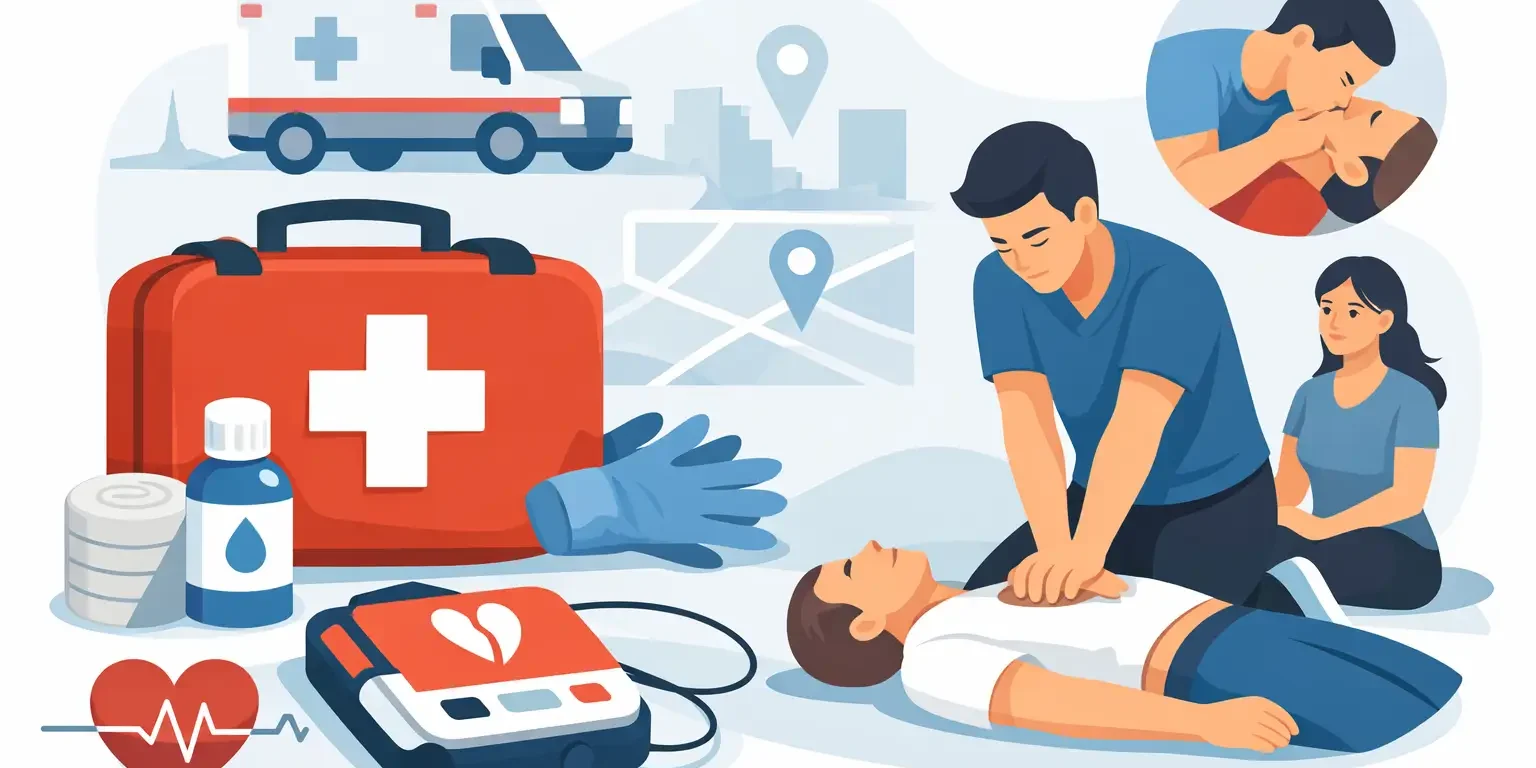
A quality course should cover adult, child, and infant considerations when they apply to the certification level being offered. Students should learn how to assess scene safety, check responsiveness, activate emergency response, provide high-quality chest compressions, use an automated external defibrillator (AED), and respond to choking. First aid instruction may also address bleeding control, burns, fractures, allergic reactions, seizures, heat-related illness, diabetic emergencies, and sudden illness.
The goal is not to turn a student into a paramedic in one class. It is to build a reliable foundation: recognize the emergency, call for help early, provide appropriate care within your training, and avoid actions that could make the situation worse.
Hands-on practice is not optional
Watching a video can introduce a technique. It cannot tell you whether your compression depth, hand placement, pace, or body mechanics are correct. CPR is a physical skill, and confidence comes from repeated practice on manikins with instructor feedback.
Look for a class that gives students meaningful time to perform skills, not simply observe them. You should expect to practice CPR, AED use, choking relief, and first aid scenarios in a supervised setting. That practice matters when an emergency is loud, stressful, and moving quickly.
How to Compare First Aid and CPR Classes Near Me
Search results can make every course look alike. They are not alike. Before enrolling, consider who needs the training, what credential is required, and how the course is taught.
For example, a parent, coach, teacher, camp counselor, healthcare applicant, security professional, or aspiring EMT may all need CPR training, but an employer or school may specify a particular certification standard. Verify the exact requirement before choosing a class. A course that fits one workplace may not satisfy another organization’s policy.
It also helps to ask whether the program is fully in person, blended, or primarily online. Online coursework can be useful for reviewing concepts, but skills evaluation requires a qualified instructor and appropriate equipment. If your purpose is employment, a clinical pathway, public safety preparation, or genuine readiness to help in an emergency, in-person instruction is usually the stronger choice.
When comparing providers, pay attention to these practical questions:
- Is the certification accepted by your employer, school, licensing body, or volunteer organization?
- Will you practice skills with an instructor who can correct your technique?
- Does the course clearly state its schedule, location, certification process, and renewal expectations?
- Are instructors experienced in emergency care, healthcare, or public safety settings?
- Is there time to ask questions about realistic scenarios you may face at work or in your community?
Convenience matters, especially for busy students and working adults. But the nearest class is not always the best value if it offers limited practice or leaves you uncertain about what to do after you leave the room.
Choose Training That Matches Your Next Step
The best course depends on your reason for taking it. Someone preparing to babysit may need basic first aid and CPR confidence. A personal trainer or childcare employee may need a current credential that meets workplace requirements. An aspiring firefighter, ambulance worker, nursing student, or EMT candidate may benefit from training that reinforces professional expectations around patient assessment, communication, and scene safety.
For people considering emergency medical services, first aid and CPR can be an important starting point, but they are not a substitute for New York State EMT education. EMT training is a structured certification pathway with broader patient-care responsibilities, classroom instruction, practical skills, examinations, and state requirements. Understanding that distinction prevents a common mistake: assuming a short CPR course provides the credentials needed to work on an ambulance.
At the same time, CPR and first aid training can help prospective EMT students test their interest in emergency care. You will see whether you can stay focused, follow a sequence of care, work with others, and respond calmly when the scenario becomes urgent. Those are valuable habits for any healthcare or public-safety path.
Why Instructor Experience Changes the Class
Emergency training is stronger when it is taught by people who understand the realities behind the procedures. An experienced instructor can explain why an AED should be brought to the patient quickly, why scene safety comes before rushing in, and how clear communication helps bystanders work as a team.
They can also correct misunderstandings that often develop from television, social media clips, or outdated advice. In a real emergency, you may not have perfect conditions, ideal space, or a room full of trained helpers. Good instruction prepares you to make sound decisions with the resources available while staying within the scope of your training.
This is especially relevant for students who plan to move into EMS or healthcare. At TIMER, first aid and CPR instruction is part of a broader local commitment to practical emergency education led by professionals with field, hospital, nursing, and emergency-response experience. That setting helps students see foundational lifesaving skills as more than a box to check. They are part of the discipline, judgment, and teamwork expected in patient care.
Arrive Ready to Learn and Practice
You do not need prior medical experience to take most first aid and CPR courses. You do need a willingness to participate. Wear comfortable clothing because CPR practice involves kneeling, leaning over a manikin, and performing repeated compressions. Plan to be present for the full session, since certifications generally depend on completing required instruction and demonstrating skills.
Come prepared with any documentation your employer, school, or program has provided. If you are renewing a credential, bring your current or expired card if requested. It is also wise to confirm whether the course includes adult-only CPR or pediatric content, first aid, AED training, or a combination of these subjects.
Do not be embarrassed to ask for another demonstration. Students learn at different speeds, and emergency skills deserve careful repetition. A professional course should treat questions as part of the learning process, particularly when the question could affect a patient’s safety.
Certification Is a Deadline, Not the End of Learning
A certification card confirms that you completed a course and met its assessment requirements. It does not mean you will remember every step perfectly years later without practice. Skills can fade, particularly if you have not had to use them.
Keep track of your renewal date and schedule recertification before a job, school program, or volunteer role creates a last-minute problem. Between classes, review the basic emergency response sequence: make sure the scene is safe, check the person, call 911 or direct someone else to call, get an AED when available, and begin care based on your training.
The most valuable outcome of first aid and CPR training is not the card in your wallet. It is the moment you recognize that someone needs help and know how to take the next right action.