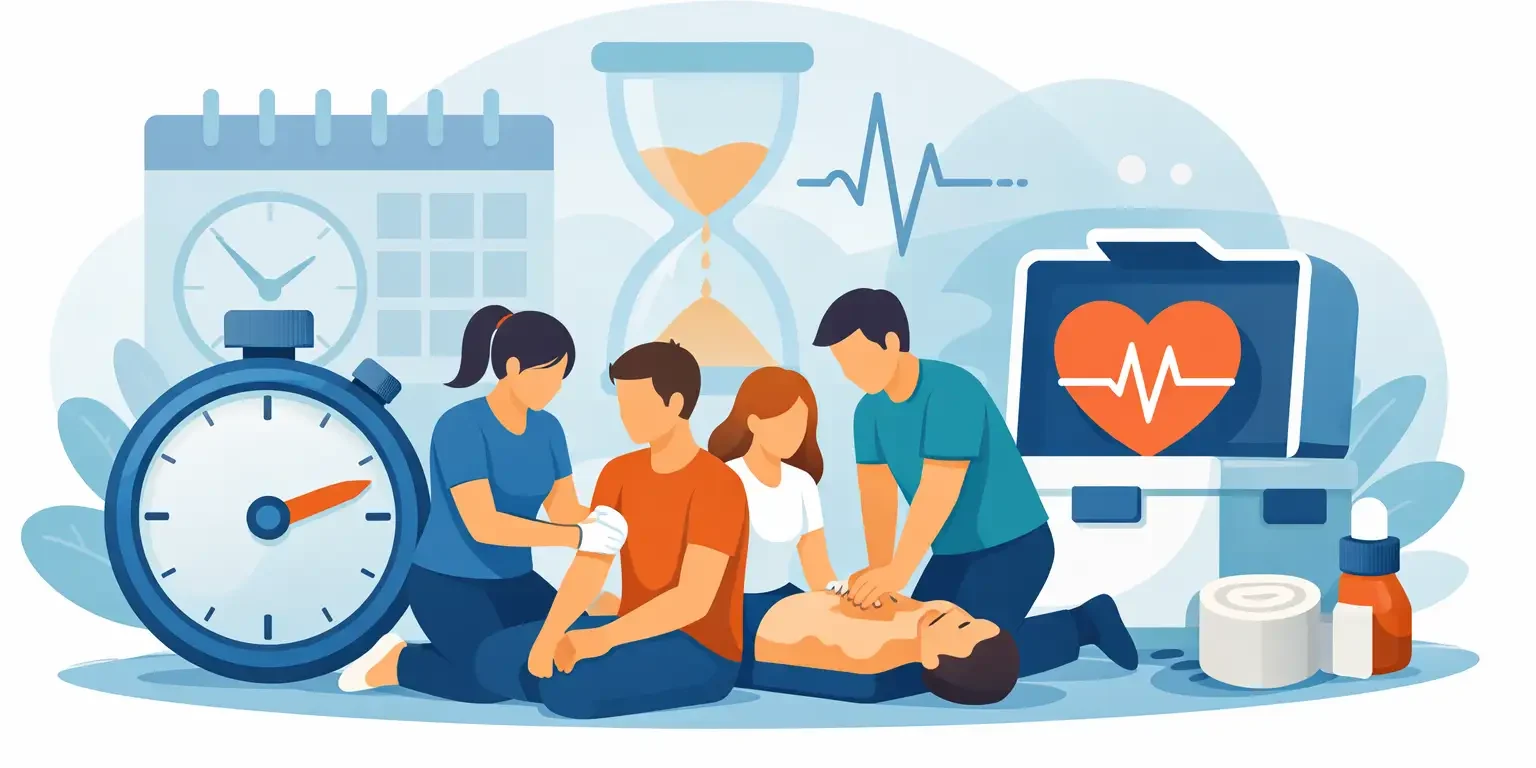
A coworker collapses in the break room. A child at a family gathering begins to choke. In those first moments, the value of training is not measured by how quickly you finished a class, but by whether you can recognize the emergency, call for help, and act with purpose. Still, scheduling matters. Many prospective students ask, how long are first aid and CPR classes before they commit to a course.
For most people, a combined first aid, CPR, and AED class can be completed in one day. The exact length depends on the credential, the age groups covered, the training format, and the amount of hands-on practice required. A basic emergency skills course may take only a few hours, while professional-level CPR training or a course that covers adult, child, and infant care can take longer.
How Long Are First Aid and CPR Classes in Most Cases?
A typical CPR-only course often runs about three to five hours. A combined first aid and CPR course commonly takes five to eight hours, especially when it includes automated external defibrillator, or AED, instruction. These timeframes allow students to receive instruction, watch demonstrations, practice skills, and complete any required knowledge or skills evaluations.
Course length should not be the only factor in selecting training. A shorter session can be appropriate for a simple renewal or a narrow workplace requirement. A more comprehensive class may be the better choice for childcare workers, coaches, security personnel, camp staff, healthcare applicants, and anyone who expects to respond to emergencies involving children or adults.
For students pursuing emergency medical services, first aid and CPR are also a foundation rather than a finish line. An EMT course involves substantially more classroom and practical instruction because EMTs must assess patients, use equipment, communicate with medical control, document care, and make patient-care decisions under pressure.
What Changes the Length of a First Aid and CPR Course?
Two courses with similar names may have very different schedules. Before registering, review exactly what the class teaches, who the certification is intended for, and whether the course meets an employer, school, licensing, or professional requirement.
The main factors that affect class time include:
- The certification level. Community CPR instruction is not the same as a healthcare-provider CPR course. Professional credentials generally include more detailed assessment and team-response skills.
- The patient populations covered. Adult-only training is usually shorter than a course that also includes child and infant CPR, choking response, and first aid considerations.
- First aid content. Adding instruction on bleeding control, burns, allergic reactions, seizures, heat illness, fractures, diabetic emergencies, and other medical concerns adds time for discussion and practice.
- The learning format. Blended programs may assign part of the knowledge component online, followed by an in-person skills session. Fully classroom-based programs cover both portions together.
- Skill verification requirements. Certification-oriented classes need time for each student to demonstrate compressions, rescue breaths when applicable, AED use, choking response, and other required skills.
A course provider should clearly explain whether the stated duration includes breaks, testing, skills practice, and certificate processing. If a schedule looks unusually brief for the material promised, ask how much hands-on time is actually included.
CPR-Only Classes vs. Combined First Aid and CPR Training
CPR training centers on life-threatening cardiac and breathing emergencies. Students learn how to identify unresponsiveness, activate the emergency response system, perform high-quality chest compressions, use an AED, and respond to choking. Depending on the course, participants may also learn skills for adults, children, and infants, as well as two-rescuer response procedures.
First aid expands the scope. It prepares students to recognize and manage common injuries and sudden illnesses until emergency responders arrive or a higher level of care is available. The goal is not to diagnose every condition. It is to provide safe, appropriate early care, prevent a problem from getting worse, and know when to call 911.
That difference explains why combined courses take longer. A student needs more than a lecture on bleeding, burns, or allergic reactions. Good instruction gives participants a chance to work through realistic situations, use supplies correctly, and ask practical questions. The classroom time creates the confidence to respond without creating false confidence about the limits of a lay responder’s role.
Is an Online First Aid or CPR Course Faster?
It can be, but the answer depends on why you need the credential. Online learning can make the knowledge portion more flexible because students can complete modules at their own pace. However, many employers and professional programs require an in-person skills evaluation for CPR certification. Watching a video is not the same as demonstrating effective chest compressions on a manikin or safely operating a training AED.
Blended learning can be a practical option for busy adults. Students complete assigned online work first, then attend a shorter in-person session focused on skill practice and testing. The total time may be similar to a traditional course, but the schedule is easier to manage.
For someone seeking training for a healthcare, EMS, or public-safety pathway, in-person instruction has a clear advantage. An experienced instructor can correct hand placement, compression depth and rate, body mechanics, scene approach, and communication habits in real time. Those corrections matter when a skill must be performed correctly under stress.
What to Expect During the In-Person Portion
A properly run class is active. Participants should expect to spend time practicing rather than sitting through a long presentation. Instructors typically introduce an emergency scenario, explain the response sequence, demonstrate the skill, and then coach students as they perform it.
For CPR, practice often includes checking responsiveness, requesting emergency help, positioning the patient, delivering compressions, using an AED, and working with another rescuer. In a first aid class, students may practice controlling severe bleeding, responding to choking, using protective barriers, and making decisions about when a person needs immediate emergency care.
This is why class duration should be viewed as an investment. A certification card may be the document an employer asks for, but the practical repetitions are what help a student remember what to do when the situation is real.
How to Choose the Right Course Length for Your Goal
Start with the requirement, not the calendar. If an employer, school, volunteer program, or licensing body requests a specific certification, confirm the accepted credential before enrolling. Some positions need basic first aid and CPR. Others require a healthcare-provider level CPR course, while EMT students must meet separate New York State EMS training requirements.
Next, consider who you may need to help. A parent, babysitter, teacher, or youth sports coach may benefit from child and infant content even if an employer only specifies adult CPR. A workplace team may need first aid instruction tailored to hazards such as heat exposure, falls, electrical injuries, or heavy equipment.
Finally, choose a provider that treats skills practice as essential. TIMER’s classes are built around practical emergency response instruction led by professionals with real field and patient-care experience. The goal is to leave with more than a completed course – it is to leave better prepared to make a difference before advanced help arrives.
Frequently Asked Questions
Can I complete first aid and CPR in one day?
Yes. Many combined courses are scheduled as a single day, commonly lasting five to eight hours. The exact duration depends on the credential and the range of topics covered.
How long does CPR certification usually last?
Many CPR and first aid certifications are valid for two years, but renewal periods can vary by issuing organization, employer, or regulatory requirement. Check the expiration date on your card and do not wait until the last minute to plan renewal training.
Is CPR training difficult?
CPR is physically active, but it is designed to be learned by people with a wide range of backgrounds. Students should expect to kneel, practice compressions, and demonstrate skills. Instructors can provide coaching and accommodations when appropriate, but certification requirements may still require successful hands-on performance.
Does first aid and CPR training qualify me to work as an EMT?
No. First aid and CPR courses provide valuable foundational skills, but EMT certification requires a state-approved education program, practical training, examinations, and completion of applicable New York State requirements. For prospective EMTs, CPR training is one step in a much broader professional preparation process.
When you compare schedules, look beyond the number of hours. Choose the class that matches your responsibility, gives you meaningful practice, and prepares you to take calm, capable action when someone nearby needs help.