A CPR card can satisfy a workplace requirement. The best first aid and CPR training does more than that: it prepares you to recognize an emergency, act without unnecessary delay, and use the skills correctly when another person needs help.
For Staten Island and greater New York City residents, that preparation may support a job in health care, education, public safety, child care, coaching, or hospitality. It can also be a first step for someone considering EMT school. The right course depends on why you need it, who will recognize the credential, and whether the instruction gives you enough hands-on practice to build real confidence.
Start With the Reason You Need Training
Before registering, identify the setting in which you expect to use your certification. An employer may require adult CPR and AED training, while a child care role may require pediatric first aid and CPR. A parent, grandparent, or coach may want broad emergency skills for home and community situations. An aspiring EMT needs a strong foundation, but should understand that a first aid and CPR course is not a substitute for New York State EMT certification.
This distinction matters. EMT education involves a much wider scope of patient assessment, medical emergencies, trauma care, ambulance operations, and state examination requirements. First aid and CPR training teaches valuable lifesaving skills, but it is designed for a different level of response. Choosing the right course means matching the training to the responsibility you expect to carry.
Ask the organization requesting your certification what it accepts. Do not assume that every CPR card meets every workplace policy. Some employers specify a particular credentialing organization, course level, or delivery format. Confirming this before class prevents the frustration of completing a course and learning that it does not meet your requirement.
What the Best First Aid and CPR Training Includes
Strong training gives students a clear sequence for recognizing danger, contacting emergency services, providing care within their training, and handing off to responding professionals. The course should explain not only what to do, but why each action matters.
Meaningful Hands-On Skills Practice
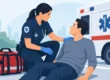
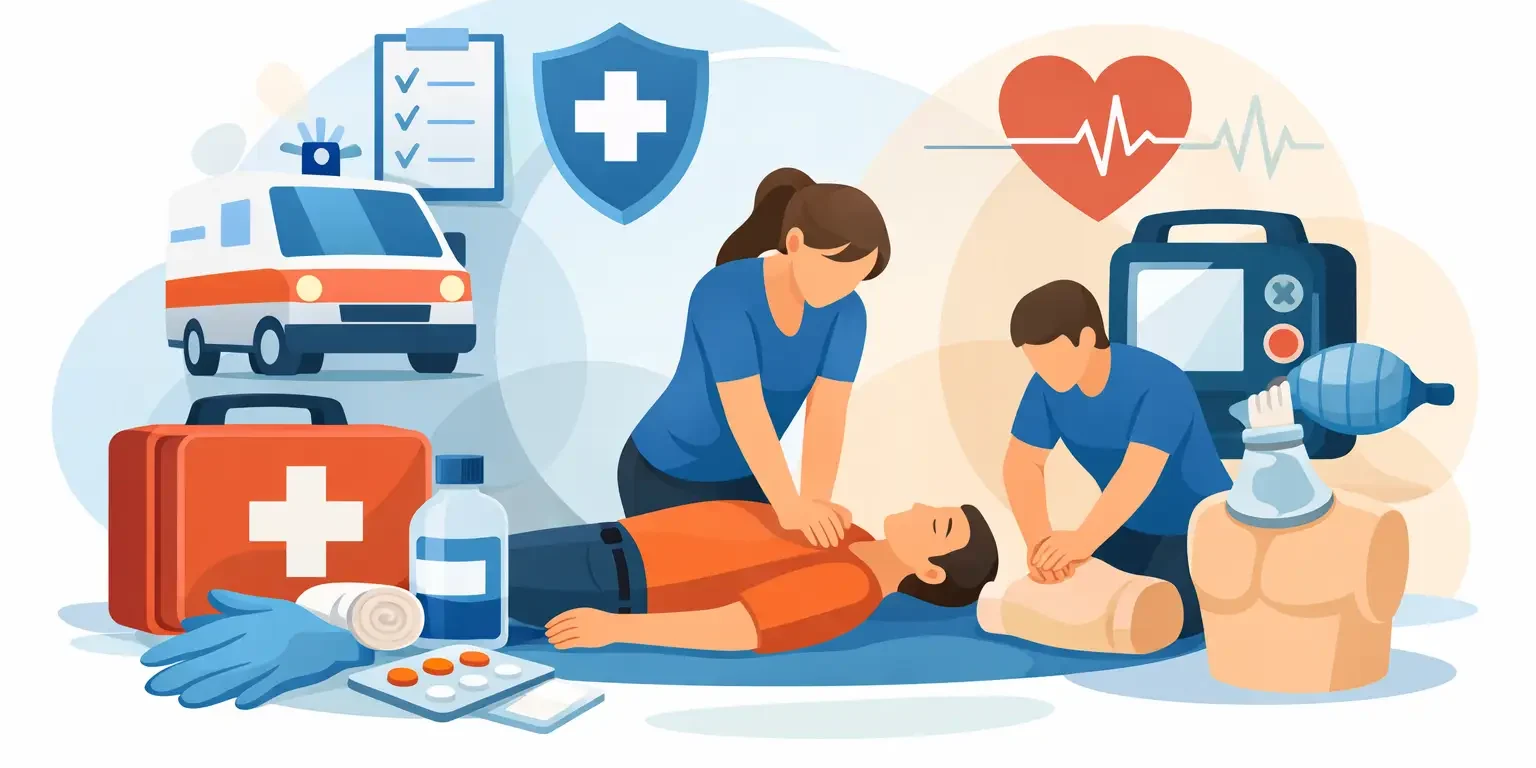
CPR cannot be learned well by watching slides alone. Students need time on training manikins to practice hand placement, compression depth and rate, ventilation techniques when included in the course, and proper use of an automated external defibrillator, or AED. An instructor should observe performance, correct errors, and allow students to repeat skills until the sequence becomes more familiar.
First aid should be practical as well. Depending on the course level, that may include controlling bleeding, responding to choking, recognizing signs of stroke or heart attack, treating burns, addressing allergic reactions, and helping a person with a sudden illness or injury until EMS arrives. The exact curriculum will vary, but students should leave with a usable approach rather than a collection of disconnected facts.
Online learning can be useful for reviewing concepts and fitting coursework into a busy schedule. However, if your job requires a skills-based credential, a fully online course may not be accepted. A blended program can be a good option when it combines online knowledge work with an in-person skills session. The deciding factor is whether the required hands-on evaluation is included and recognized by your employer or agency.
Instructors Who Understand Emergency Response
A capable instructor makes a major difference in how students absorb high-pressure material. Look for educators with current or substantial experience in EMS, nursing, hospital care, fire service, or another emergency-response setting. Field experience helps an instructor explain how emergencies actually unfold: a scene may be crowded, a patient may be frightened, and the first step is often to stay calm enough to assess what is happening.
Experience alone is not enough. Effective instructors also know how to teach beginners. They should welcome questions, give direct feedback, and explain when a student should call 911 rather than trying to manage a serious problem alone. In emergency care, confidence should come from preparation and good judgment, not from overestimating one’s scope of training.
A Credential That Has a Clear Purpose
Certification is a practical part of the decision. Find out what credential is issued, how long it remains valid, and whether there is a skills assessment. If training is needed for employment, ask how quickly documentation is provided after successful completion.
Be cautious of courses that make vague promises about “national” acceptance without explaining the credential. A reputable provider can clearly describe the course, its issuing organization, the student requirements, and the process for successful completion. It should also be clear about attendance expectations. Missing skill practice can affect both learning and certification eligibility.
Questions to Ask Before You Enroll
A few direct questions can help you compare programs without getting lost in course descriptions. Ask whether the class covers adult-only or adult and pediatric care, whether first aid and AED instruction are included, and whether in-person skills testing is part of the program. If you are enrolling for work, verify that the course meets your employer’s policy.
You should also ask about class size and practice time. A large group is not automatically a problem, especially when there are enough instructors and skill stations. Still, every student needs the opportunity to perform CPR and demonstrate the required skills. Watching someone else practice is useful, but it is not the same as placing your hands on a manikin and receiving correction.
Schedule and location matter, particularly for students balancing employment, family responsibilities, or EMT coursework. Convenience is valuable, but it should not be the only factor. A shorter course is not necessarily a better course if it leaves little time to practice, ask questions, or complete a meaningful evaluation.
Training for Families, Workplaces, and Future EMTs
The best course has different priorities for different students. A family member may benefit most from a class that makes emergency decisions feel manageable: how to call for help, how to respond to choking, and how to begin CPR while waiting for EMS. The value is not becoming a medical professional. It is being prepared to take appropriate action during the first critical minutes.
For workplaces, consistency is often the priority. Employers need employees who hold acceptable credentials and understand their role in an emergency plan. That may include alerting supervisors, retrieving an AED, directing emergency responders to the location, and documenting an incident according to workplace policy.
For future EMTs, first aid and CPR instruction can help confirm an interest in emergency care. It introduces the discipline of assessment, communication, scene awareness, and patient-centered action. But prospective EMS students should be ready for the next level of commitment. New York State EMT training requires structured education, attendance, skill development, and preparation for certification examinations.
At TIMER, students learn from professionals whose experience connects classroom instruction to the expectations of emergency medical care. That local, hands-on approach is especially valuable for people who want training that supports both immediate readiness and longer-term career goals.
Prepare to Use the Skills, Not Just Pass the Class
Certification should be the beginning of preparedness, not the finish line. Keep your card and course records where you can access them. Learn where AEDs are located at your workplace, school, gym, or community facility. If you are responsible for children or an older family member, consider what emergency information responders may need, such as medications, allergies, or medical history.
Skills also fade when they are not used. Review course materials periodically, pay attention during recertification, and take each practice session seriously. During a real emergency, no one expects a bystander to replace trained EMS professionals. What matters is recognizing the problem, calling for help, and providing the care you have been trained to give.
Choose a course that respects that responsibility. The right training will leave you with more than a certificate – it will give you a practical reason to believe that, when help is needed, you can be part of the response.