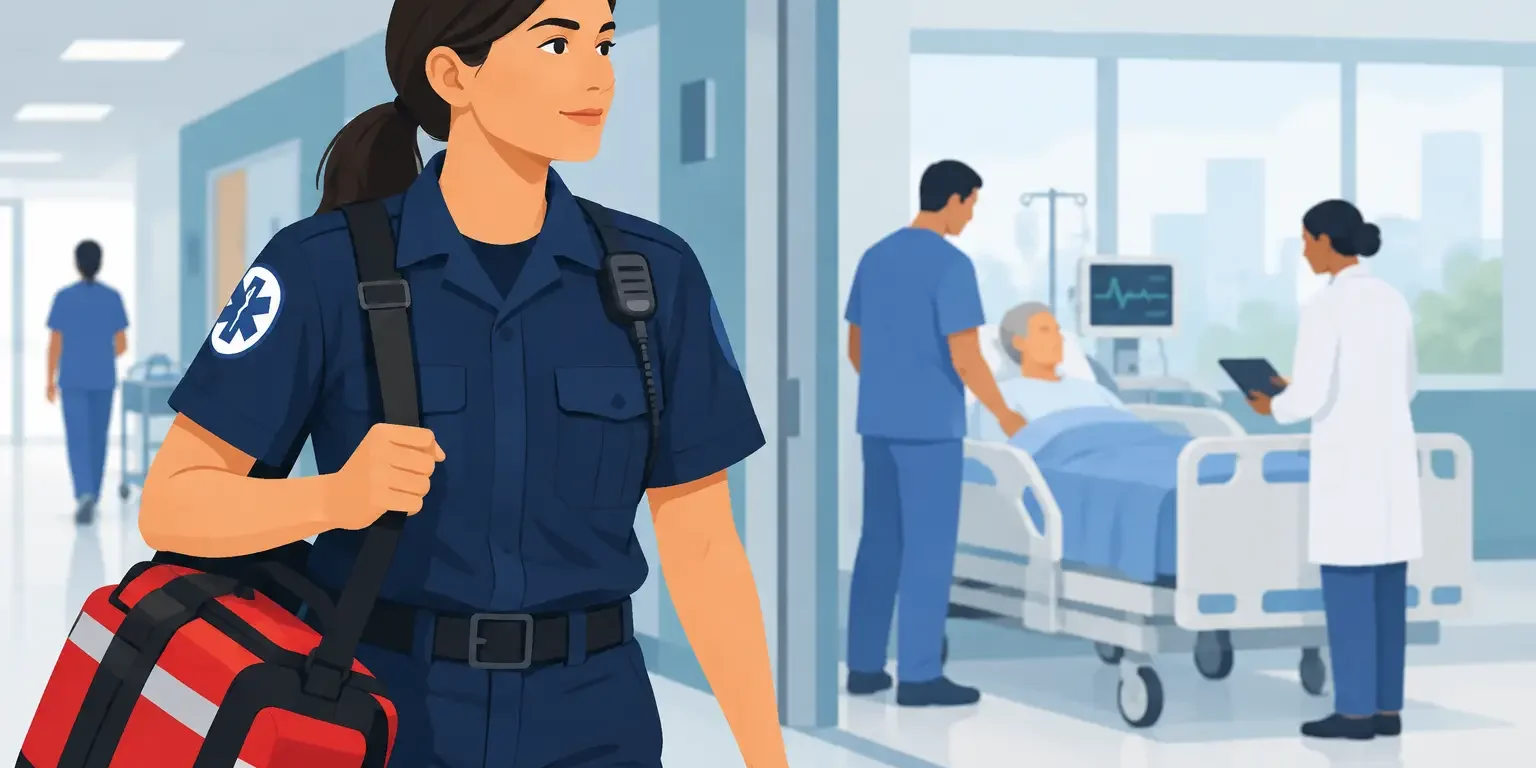
A busy emergency department does not run on nurses and physicians alone. Patients still need timely vital signs, safe movement from one care area to another, basic support, and clear communication when conditions change. That is where EMT training can be valuable. So, can EMTs work hospitals? Yes. Many hospitals hire EMTs, especially in emergency care settings, but the job title, responsibilities, and hiring requirements vary by facility.
For Staten Island and New York City residents considering EMT certification, hospital employment can be a practical career path. It can also build experience for future work in nursing, medicine, paramedicine, fire service, public safety, or ambulance operations. The key is understanding what an EMT credential prepares you to do and where hospital policies set limits.
Can EMTs Work in Hospitals in New York?
EMTs can work in hospitals in New York, although they are not hired to replace registered nurses, licensed practical nurses, paramedics, or physicians. A New York State EMT certification demonstrates training in emergency assessment, basic life support, patient movement, communication, and prehospital patient care. Hospitals may recognize those skills when hiring for support roles.
The most common setting is the emergency department. An EMT may be hired as an emergency department technician, ER technician, patient care technician, emergency services technician, or a similarly named position. Some hospitals also employ EMTs in patient transport, observation units, urgent care centers, behavioral health intake areas, procedural departments, or event and security-related medical teams.
The exact role depends on the hospital system, department needs, union or staffing structure, and internal policies. Two hospitals may post nearly identical EMT technician positions but assign different tasks. Reading the job description carefully matters just as much as meeting the minimum certification requirement.
What EMTs Do in Hospital Roles
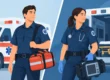
Hospital EMT work often draws on the same habits taught in a strong EMT course: staying calm, recognizing changes in a patient’s condition, using basic equipment correctly, documenting accurately, and treating every patient with respect. The environment is different from an ambulance call, however. Instead of working with a small field crew and transporting a patient, an EMT in a hospital is part of a larger clinical team.
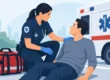
Depending on the facility and training provided, an EMT may take and record vital signs, assist with patient transfers, obtain weights, help prepare treatment spaces, transport patients for testing or admission, apply splints or basic dressings under direction, and restock emergency equipment. In an emergency department, technicians may assist during trauma activations, observe patients, perform electrocardiograms if trained by the employer, collect specimens when permitted, and support nurses during routine patient-care tasks.
The work is hands-on, but it is also detail-oriented. A missed change in blood pressure, oxygen saturation, mental status, or skin color can matter. EMTs must report concerns promptly to the nurse or provider responsible for the patient. Good hospital technicians do not work beyond their role. They recognize what they are seeing, communicate it clearly, and follow the department’s chain of command.
Scope of Practice Still Applies
An EMT certification does not automatically authorize every task a hospital may need completed. Scope of practice, state regulations, hospital policy, physician orders, departmental protocols, and additional competency training all affect what an EMT can do.
For example, one employer may train EMT technicians to obtain 12-lead ECGs, draw blood, or assist with certain procedures after a documented competency process. Another may reserve those functions for staff with different credentials. Medication administration, intravenous therapy, advanced airway procedures, and independent clinical decision-making are generally outside the usual EMT hospital role unless another license, certification, or specific authorized role applies.
This is not a limitation on the value of EMT training. It is a reminder that healthcare is team-based. Each professional has defined responsibilities, and safe patient care depends on respecting those boundaries.
Why Hospitals Hire EMTs
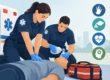
Hospitals often value EMT candidates because EMT education is built around urgent patient assessment and practical response. EMTs learn to approach patients methodically, identify immediate threats, take vital signs, use personal protective equipment, communicate with distressed families, and provide basic life support when seconds matter.
That foundation is particularly useful in emergency departments, where patient volume can change quickly. A person who has been trained to assess a patient with chest pain, breathing difficulty, altered mental status, trauma, or possible stroke already understands the importance of observation and escalation.
EMT candidates may also bring experience from ambulance work, volunteer EMS agencies, fire departments, or community emergency response. Even an entry-level EMT who has not yet worked on an ambulance can show employers that they have completed a structured course, practiced patient-care skills, and prepared for New York State certification standards.
Still, certification alone is not always enough to secure a hospital job. Employers may prefer previous patient-contact experience, current CPR credentials, flexible availability, and comfort working nights, weekends, and holidays. Some positions require additional qualifications such as phlebotomy training, ECG competency, a nursing assistant credential, or prior emergency department experience.
EMT Hospital Jobs Compared With Ambulance Work
For some EMTs, a hospital position offers a more predictable workplace than field EMS. The equipment is close at hand, physicians and nurses are available, and patients are already within a healthcare facility. There may also be regular exposure to many types of medical conditions, which can be useful for someone planning to pursue another healthcare credential.
At the same time, hospital work is not necessarily easier than ambulance work. Emergency departments can be fast, crowded, emotionally demanding, and physically strenuous. EMTs may spend long shifts on their feet, move patients safely, respond to rapidly changing priorities, and care for people who are frightened, intoxicated, confused, seriously ill, or in pain.
Ambulance work provides a different kind of independence and scene experience. EMTs assess patients in homes, streets, workplaces, and public spaces, often with limited information. Hospital work provides closer exposure to the next stages of care: testing, treatment, admission, discharge planning, and collaboration among several clinical disciplines. Neither route is automatically better. The right choice depends on your career goal, schedule, and the kind of patient-care environment where you can perform well.
Preparing for an EMT Role in a Hospital
The first step is earning and maintaining New York State EMT certification through an approved education pathway. Students should take the course seriously from the beginning. Hospital managers look for candidates who can demonstrate professionalism, reliable attendance, patient-care judgment, and a willingness to keep learning.
Practical skills matter. Be prepared to explain how you assess a patient, obtain accurate vital signs, protect patient privacy, use proper body mechanics, and respond if a patient becomes unstable. Employers also notice communication. In a hospital, EMTs interact with nurses, providers, patients, family members, transport staff, registration teams, and security personnel during the same shift.
When reviewing job postings, look beyond the title. Confirm whether active NYS EMT certification is required or preferred, whether BLS certification must be current, and whether the facility expects prior experience or additional technical competencies. Ask about orientation, supervision, shift requirements, and the tasks that are specifically included in the role.
For candidates who need a strong starting point, TIMER’s classroom-based EMT instruction emphasizes the field skills, patient-care decision-making, and exam preparation that employers expect from an entry-level professional. The goal is not simply to pass an exam. It is to be ready to contribute responsibly when a patient needs help.
Is Hospital Work a Good Next Step for an EMT?
Hospital work can be an excellent option for EMTs who want regular patient contact and exposure to a clinical setting. It may be especially relevant for future nurses, physician assistants, doctors, paramedics, and emergency-services professionals. Seeing how emergency patients move from triage to treatment can strengthen clinical awareness and professional confidence.
It is not the only path, and it does not eliminate the value of field experience. Many successful healthcare professionals have worked in both settings. What matters is choosing a role that gives you meaningful responsibility, appropriate supervision, and opportunities to develop the habits that protect patients.
An EMT credential can open a hospital door, but your preparation, professionalism, and willingness to keep building skills determine what you do once you walk through it.