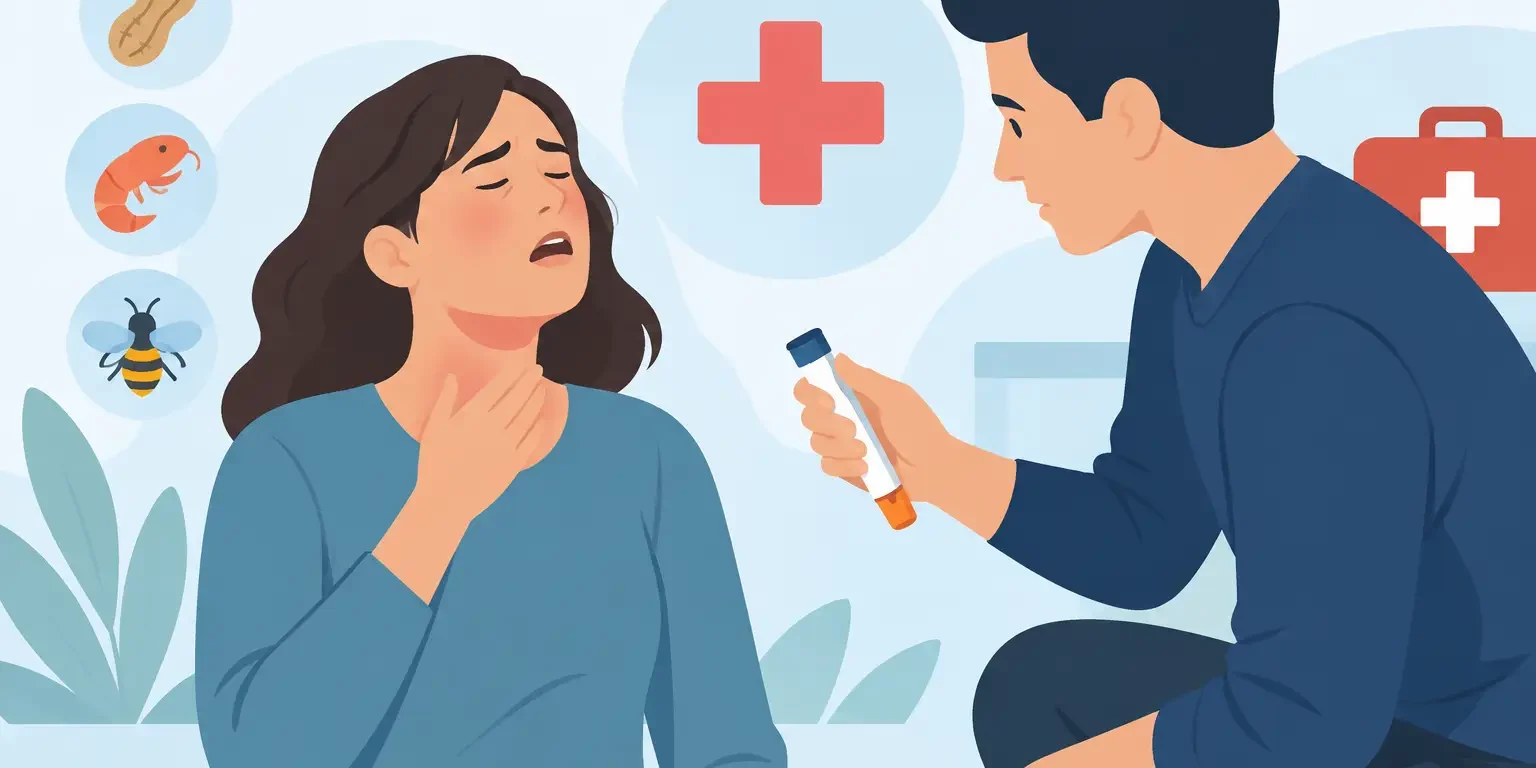
A patient who says, “My throat feels tight,” after eating, taking a medication, or being stung by an insect may be only minutes from a life-threatening airway emergency. Knowing how to treat anaphylaxis means recognizing that this is not a wait-and-see situation. The priority is prompt epinephrine, activation of emergency services, and continued observation by trained providers.
For future EMTs, experienced responders, school staff, families, and anyone responsible for others, the lesson is straightforward: anaphylaxis can worsen rapidly, sometimes before a rash becomes obvious. Fast, organized action gives the patient the best chance of recovery.
What Anaphylaxis Looks Like in the Field
Anaphylaxis is a severe, systemic allergic reaction. It may occur after exposure to foods such as peanuts or shellfish, medications, insect venom, latex, or another known allergen. In some cases, the trigger is not immediately clear.
The most concerning finding is airway or breathing involvement. Listen for hoarseness, stridor, wheezing, persistent cough, shortness of breath, or a patient reporting throat tightness or trouble swallowing. Swelling of the lips, tongue, face, or throat is also a major warning sign.
Skin symptoms are common, but they are not required. Hives, flushing, itching, and swelling can support the assessment, yet a patient can have anaphylaxis without them. Gastrointestinal symptoms such as repeated vomiting, cramping, or diarrhea may occur, especially after food exposure. Signs of poor circulation, including dizziness, fainting, weak pulses, pale skin, or low blood pressure, indicate a potentially critical reaction.
A useful field mindset is to assess the whole patient, not just the rash. A likely allergen exposure plus respiratory compromise, circulatory symptoms, or involvement of more than one body system should raise immediate concern for anaphylaxis.
How to Treat Anaphylaxis: The First Priorities
Give epinephrine without delay
Epinephrine is the first-line treatment for anaphylaxis. It helps reduce airway swelling, improve breathing, support blood pressure, and limit the progression of the reaction. When a patient has a prescribed epinephrine auto-injector and symptoms are consistent with anaphylaxis, use it promptly according to the device instructions and your level of training.
Do not delay epinephrine while waiting to see whether an antihistamine works. Antihistamines may help itching or hives, but they do not reverse airway swelling, bronchospasm, or shock. They are not a substitute for epinephrine.
In the community, a bystander may need to assist a patient with their prescribed auto-injector. In an EMS setting, treatment must follow current agency protocol, scope of practice, and medical direction. EMT students should learn the clinical reasoning behind the intervention as well as the mechanics of administering it. Correct action under pressure depends on recognizing the emergency early.
Call 911 immediately
Every suspected case of anaphylaxis requires emergency evaluation, even if the patient improves after epinephrine. Call 911 or activate the local emergency response system as soon as possible. Improvement can be temporary, and symptoms can return after the initial reaction appears controlled.
When calling, clearly state that the patient is having a severe allergic reaction or possible anaphylaxis. Share the suspected trigger, the patient’s symptoms, whether epinephrine was given, the time it was administered, and whether there has been any improvement. This information helps incoming responders prepare before they arrive.
Position the patient carefully
Keep the patient lying down when possible, particularly if they feel weak, dizzy, or faint. Elevating the legs may support circulation if it does not worsen breathing. A patient with significant respiratory distress may tolerate a more upright position better, so adjust carefully while avoiding unnecessary movement.
Do not allow a patient who has fainted, feels lightheaded, or shows signs of shock to stand or walk. Sudden standing can worsen circulatory collapse. If vomiting occurs or the patient is unconscious but breathing, position them on their side to help protect the airway.
Continue Assessment While Help Is Coming
After epinephrine is administered and 911 has been activated, the work is not finished. Stay with the patient and reassess frequently. Watch for worsening swelling, declining mental status, increased work of breathing, cyanosis, persistent vomiting, or signs of shock.
If the patient stops breathing normally or becomes unresponsive, begin CPR and use an AED as soon as one is available. Follow dispatcher instructions until EMS arrives.
For EMS personnel, the assessment remains focused on airway, breathing, circulation, mental status, skin findings, and response to treatment. Obtain a focused history when the patient’s condition allows: What was the suspected exposure? When did symptoms begin? Do they have known allergies? Have they had anaphylaxis before? Did they use an auto-injector, and at what time?
This information matters, but it should never postpone urgent intervention. A good emergency assessment is efficient: identify the immediate threat, act within protocol, and gather additional details while treatment and transport planning are underway.
What About a Second Dose of Epinephrine?
Some patients carry two epinephrine auto-injectors because symptoms may persist or return before advanced care is available. If symptoms do not improve or worsen after the first dose, a second dose may be needed according to the patient’s prescription instructions, local protocol, medical direction, or dispatcher guidance.
The practical point is that one dose does not eliminate the need for EMS. A patient may require additional treatment, airway management, oxygen support, cardiac monitoring, and observation in an emergency department. Anaphylaxis can have a biphasic course, meaning symptoms return after an initial period of improvement.
Common Mistakes That Cost Time
The most dangerous mistake is waiting for symptoms to become unmistakable. By the time severe throat swelling, profound wheezing, or collapse develops, the emergency has become harder to manage. When anaphylaxis is suspected, early epinephrine is the appropriate priority.
Another mistake is relying on oral medication alone. A patient may have trouble swallowing, may vomit, or may deteriorate before an oral medication has any meaningful effect. Antihistamines and other supportive treatments have roles in care, but they do not replace epinephrine in anaphylaxis.
Avoid giving food or drink to a patient with breathing difficulty, altered mental status, or nausea and vomiting. Do not assume that a person is safe because hives fade or they say they feel better. Continue monitoring until care is transferred to EMS or hospital personnel.
Finally, do not let uncertainty about the trigger distract from the patient’s presentation. Not every reaction follows a familiar pattern. In emergency care, treatment decisions are based on the patient in front of you: their airway, breathing, circulation, symptoms, and likely exposure.
Why Hands-On Training Matters
Reading the steps is useful. Performing them calmly in a realistic scenario is different. Emergency responders must be ready to recognize the subtle early signs of anaphylaxis, use equipment correctly, communicate with a frightened patient, and make sound decisions while conditions change.
That is why EMT education emphasizes patient assessment, practical skills, current protocols, and repeated scenario-based practice. Anaphylaxis calls are not just about identifying an allergy. They test whether a responder can establish priorities, intervene decisively, reassess continuously, and prepare for rapid transport.
At TIMER, students learn from instructors with real EMS, hospital, nursing, and emergency-response experience. The goal is not simply to prepare for an examination. It is to build the disciplined habits that help providers respond effectively when a patient’s condition changes in seconds.
When anaphylaxis is suspected, act early, use epinephrine appropriately, activate 911, and stay focused on airway, breathing, and circulation. Preparedness is what turns a frightening emergency into a response that can truly make a difference.