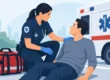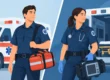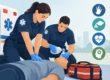
A patient is struggling to breathe in a Staten Island apartment. Family members are frightened, the scene is crowded, and every decision needs to be calm, organized, and focused on the patient. Both EMTs and paramedics may respond to that call, but their responsibilities, education, and scope of practice are not the same. Understanding EMT versus paramedic roles is a practical first step for anyone considering emergency medical services as a career.
For many people, EMT certification is the entry point into EMS, hospital transport, public safety, firefighting, or a longer healthcare career. Paramedic education is a more advanced clinical path that builds on the EMT foundation. Neither role is simply “better” than the other. The right choice depends on your career goal, readiness for additional education, and the type of patient care you want to provide.
EMT Versus Paramedic Roles in the Field
EMTs and paramedics work as part of a coordinated emergency response system. They assess patients, provide care within their authorized scope, communicate with dispatch and receiving facilities, document what happened, and help move patients safely to appropriate care. Their work can take place in ambulances, hospitals, public venues, private homes, nursing facilities, disaster scenes, and alongside police and fire personnel.
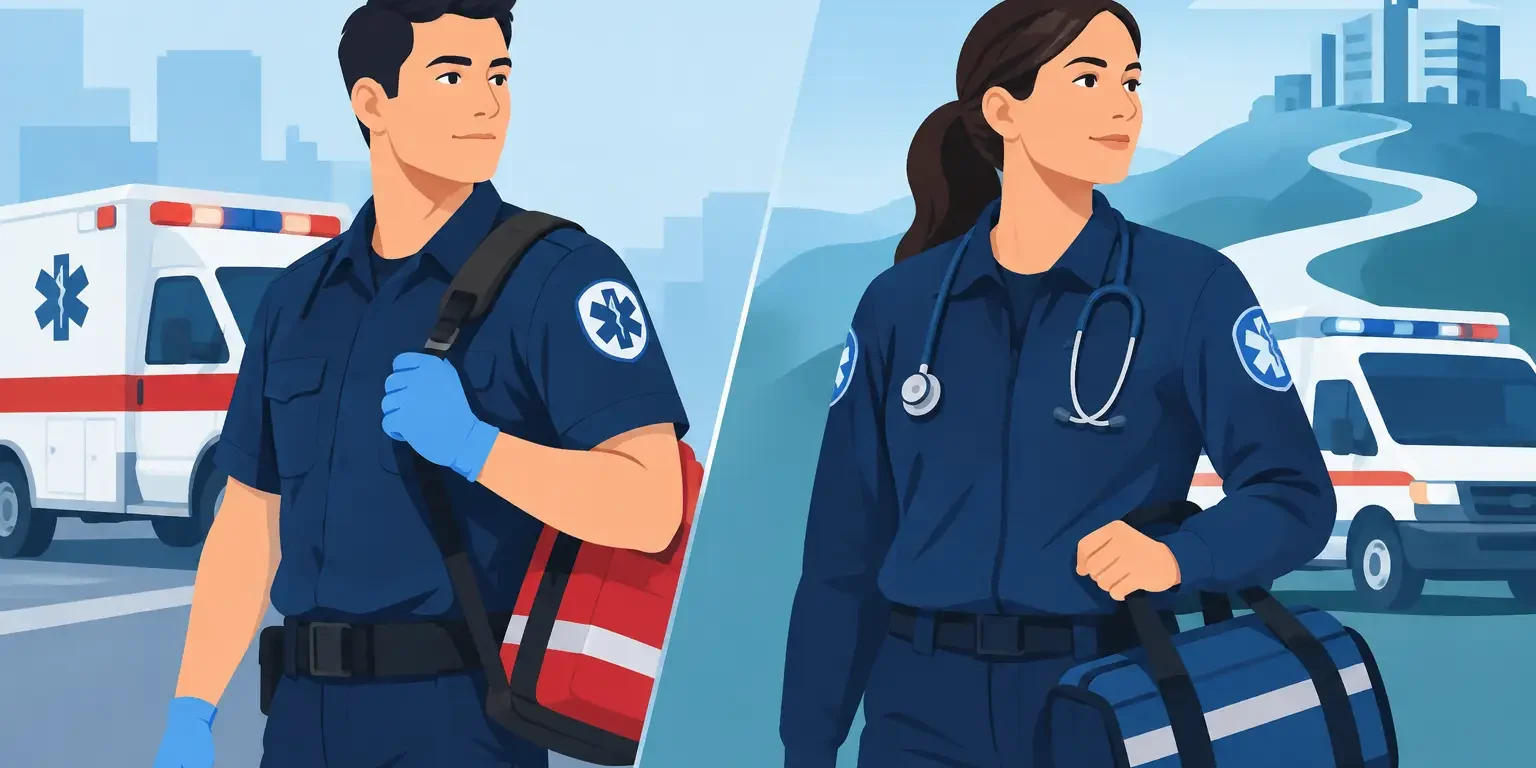
The central difference is the depth of clinical education and the range of interventions each provider may perform. An EMT is trained to recognize emergencies, begin essential care, use basic equipment, and make sound patient-care decisions under pressure. A paramedic has advanced education in assessment, pharmacology, cardiac care, airway management, and other higher-level interventions.
On many ambulance crews, the EMT and paramedic work closely together. The EMT may obtain vital signs, gather a patient history, assist with equipment, provide basic interventions, and support safe transport. The paramedic may lead advanced assessment and treatment when the patient’s condition requires it. In other settings, EMTs may work with other EMTs, and paramedics may work with paramedics. Staffing models vary by agency, assignment, and local system requirements.
Both roles require professional judgment. A provider does not succeed simply by memorizing a protocol. EMS work requires clear communication, respect for patients, situational awareness, teamwork, and the discipline to reassess when conditions change.
What EMTs Are Prepared to Do
New York State EMT training prepares students for the essential responsibilities of entry-level emergency medical care. EMTs learn how to approach a scene safely, assess sick and injured patients, recognize life threats, and provide care while preparing for transport.
An EMT’s skills commonly include CPR, bleeding control, splinting, oxygen administration, basic airway support, patient positioning, vital signs, emergency childbirth support, and the use of certain approved emergency equipment. EMTs also learn to respond to medical complaints such as chest pain, diabetic emergencies, allergic reactions, seizures, breathing problems, and altered mental status.
The work is hands-on, but it is also communication-heavy. EMTs speak with patients who may be confused, in pain, or afraid. They communicate key information to their partner, supervisors, emergency department staff, and other responders. A well-documented patient care report can be just as important as a correctly applied splint because it helps maintain continuity of care.
EMT certification can be especially valuable for aspiring firefighters, ambulance personnel, emergency department employees, nursing students, and individuals exploring medicine or public safety. It offers early patient-contact experience and a meaningful credential without requiring the longer academic commitment of paramedic school.
The EMT role is not “just transport”
A common misunderstanding is that EMTs only drive ambulances or move patients from one location to another. Safe transport is certainly an important duty, but it is not the full job. Patient conditions can change quickly during a call. EMTs must recognize deterioration, provide timely care, request additional resources when appropriate, and continue reassessment from first contact through transfer of care.
Strong EMTs bring calm structure to unpredictable situations. That ability is valuable whether they remain in EMS or later move into nursing, firefighting, hospital care, or another healthcare profession.
What Makes the Paramedic Role Different
Paramedics receive more extensive clinical education and are prepared for a broader range of advanced patient-care responsibilities. Their training typically includes advanced anatomy and physiology, pathophysiology, cardiology, pharmacology, advanced airway management, intravenous access, medication administration, trauma care, and care for complex medical emergencies.
On a critical call, a paramedic may interpret cardiac findings, establish vascular access, administer authorized medications, manage advanced airways, and make treatment decisions under medical direction and established protocols. These skills demand more than technical ability. They require a detailed understanding of why a treatment is indicated, when it may be unsafe, and how to evaluate a patient’s response.
Paramedics frequently take a leading clinical role on high-acuity calls, but they are still part of a team. They rely on EMT partners, other paramedics, firefighters, dispatchers, nurses, physicians, and law enforcement personnel. The most effective paramedics do not work in isolation. They coordinate care, delegate appropriately, and communicate clearly when seconds matter.
The advanced scope also brings added responsibility. Paramedics may face more complex decision-making, longer educational demands, and a greater need to maintain clinical knowledge. For students who want advanced prehospital medicine and are prepared for the commitment, this can be a rewarding path.
Training Time, Commitment, and Career Planning
Choosing between EMT and paramedic education is often a question of timing. EMT training is generally the more direct starting point for someone new to emergency care. It provides foundational knowledge, practical skills practice, and preparation for New York State certification requirements and examinations.
Paramedic training requires a larger commitment. Students should expect more classroom instruction, clinical education, field experience, study time, and testing. Before pursuing paramedic school, many candidates benefit from working as EMTs and gaining confidence with patient assessment, ambulance operations, radio reports, documentation, and the realities of shift work.
That experience is helpful, but there is no single timeline that fits everyone. A recent high school graduate may begin with EMT certification to explore healthcare while building work experience. A hospital employee may pursue EMT training to strengthen patient-care skills, then advance to paramedic education later. An aspiring firefighter may need EMT certification for employment opportunities and may decide that the EMT role best matches long-term goals.
Career planning should also account for your schedule and personal responsibilities. EMS education requires attendance, skill practice, reading, examination preparation, and the willingness to accept feedback. Students who treat training as a professional obligation are better positioned to succeed in the classroom and on the street.
How to Choose the Right Starting Point
Start by considering the kind of work you want to do in the next one to three years. If you want an accessible route into emergency medical services, direct patient contact, and a foundation for healthcare or public safety work, EMT education is often the right first move. It allows you to build practical confidence while earning a recognized credential.
If your long-term goal is advanced prehospital care, paramedic may be the destination, but EMT is still a valuable beginning. The habits developed in EMT training – careful assessment, scene safety, patient dignity, teamwork, and accurate communication – remain essential at every level of EMS.
It is also reasonable to choose EMT as a career rather than viewing it only as a stepping stone. Many EMTs find purpose in serving their communities, supporting high-quality ambulance operations, and helping patients through frightening moments. Advancement is an option, not an obligation.
Questions worth asking before you enroll
Consider whether you are ready for patient contact in difficult situations, including illness, injury, grief, mental health crises, and unpredictable hours. Ask yourself whether you prefer learning foundational emergency care first or whether you are prepared for the longer academic and clinical commitment of paramedic education. Also consider the employment requirements for the agencies or healthcare settings that interest you.
For New York City-area students, local training matters. Learning from experienced EMS and healthcare professionals helps connect textbook concepts to the calls, protocols, communication standards, and professional expectations you may encounter in the region. At TIMER, students preparing for New York State EMT certification receive classroom-based instruction centered on field skills, patient-care decision-making, and exam readiness.
Build the Foundation Before the Emergency
EMS careers are built well before the sirens start. They are built through studying when you are tired, practicing skills until they become reliable, accepting correction, and learning to treat every patient with respect. Whether you begin as an EMT or eventually continue to paramedic education, that preparation gives you the ability to be useful when someone in your community needs help most.